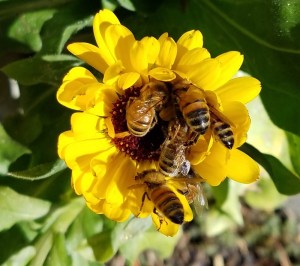
We made most of the mistakes that new beekeepers make in the first year in our first couple of months. We learned about robbing, wax moths, and hive beetles the hard way and at quite some expense. Before you buy a hive, check for classes at a local beekeeper association. We also mentor new or prospective beekeepers in our area.
If there is no beekeeper association close to you, educate yourself. Here are some resources we have found helpful:
- American Beekeeping Federation Newsletter
- American Bee Journal
- Bee Culture
- First Lessons in Beekeeping by K.S. Delaplane
- Honey Bees and Beekeeping: A Year in the Life of an Apiary.
- UGA Honey Bee Program
- South Carolina Midstate Bee Association
- UGA Honey Bee Program
- Nectar and Pollen Plants
- The Honeybee Conservancy
- Honey Bees Getting Started
- Pollinator Stewardship Council
How you can help bees
According to Georgia Grown, honey bees are the top pollinator of agricultural crops in the United States, and their pollination accounts for over 30 percent of the fruits and vegetables grown in Georgia. Loss of habitat, disease, and elimination of wild flowers has contributed to a severe decrease in the numbers of bees world wide. (Georgia Grown, A Guide to Georgia’s Farms, Forests, Food and Exports, 2015-16.)
One simple way to help bees and the environment is to minimize the use of herbicides in your lawn. Not only does clover provide nectar for bees, it puts nitrogen into the soil, which helps your lawn stay healthy with less fertilizer. We had a sloped front yard at our old home, and the introduction of clover with its deep roots helped control erosion better than any of the different types of grass we tried over the years.
Another way is to aim for year-round color in your garden. Yes, there are times when our garden looks as dead as anyone else’s, but we do have a long bloom season. We also dead-head the plants that are popular with bees to extend the bloom time. Check out pollinatorstewardship.org for more ideas on how you can help protect bees and other pollinators.
All Photography By Hedi England
Email: Beekeepers@LazerCreekApiary.com
Tel: (706) 801-2362
 Lazer Creek Apiary